
Iran Rejects US Draft UN Resolution on Strait of Hormuz

Iran Rejects US Draft UN Resolution on Strait of Hormuz
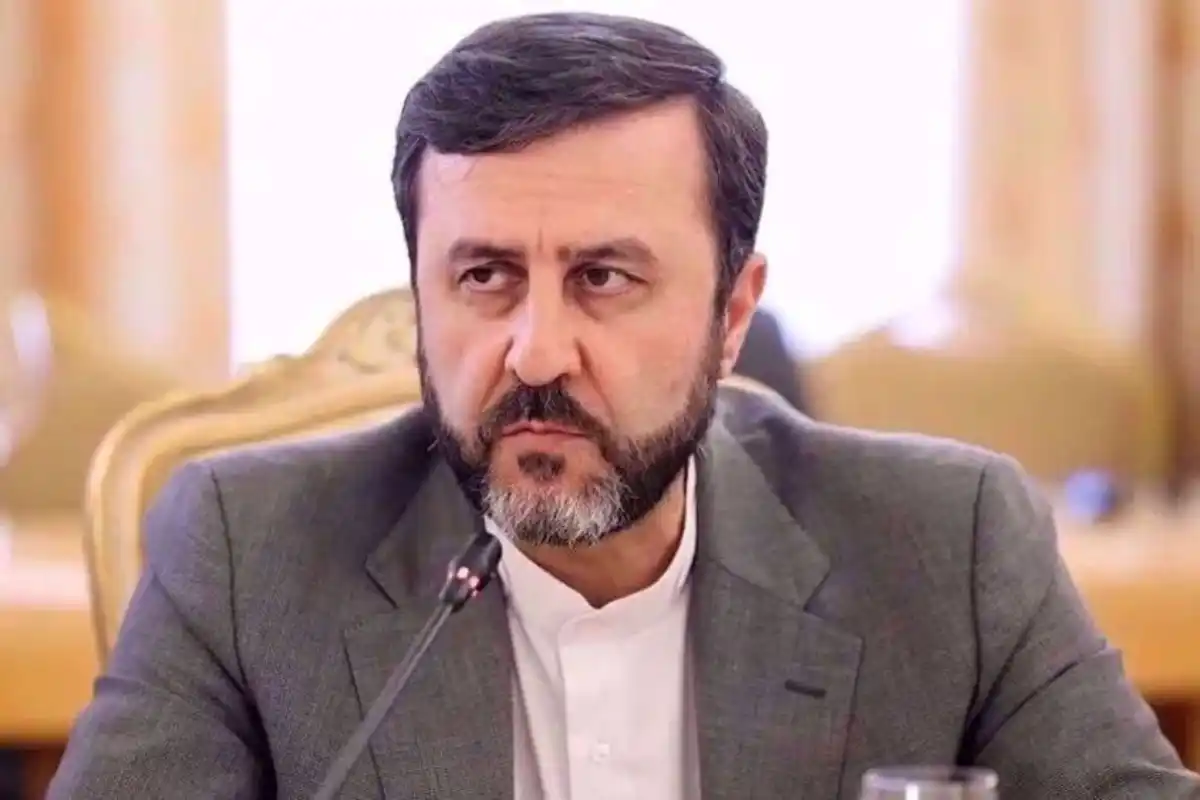
The United States is pushing a draft resolution through the UN Security Council targeting Iranian activity in the Strait of Hormuz — the narrow passage through which roughly one-fifth of the world’s daily oil supply moves. Iran’s response came fast, sharp, and from the highest diplomatic level available. Deputy Foreign Minister for Legal Affairs Kazem Gharibabadi called the American initiative legally flawed, politically motivated, and predestined to fail. What sits beneath that diplomatic language is a confrontation with consequences that extend far beyond the Persian Gulf.
What the US Resolution Actually Demands
Washington’s draft resolution, developed after closed-door consultations with select Persian Gulf states last week, makes three core demands. It calls on Iran to immediately halt what it characterises as attacks in the Strait of Hormuz. It threatens new sanctions if Tehran refuses to comply. And it raises the possibility of authorising the use of force as a last-resort enforcement mechanism.
That third element is the most significant and the most legally contentious. Authorising force through the UN Security Council requires consensus among permanent members — a threshold that has historically proved nearly impossible to achieve when major powers hold opposing interests. Russia and China, both permanent members with deep economic relationships with Iran, have consistently blocked Western-sponsored resolutions targeting Tehran. Washington’s ability to actually pass this text, let alone enforce it, is far from guaranteed.
Tehran’s Legal Counterargument — and Why It Has Structural Merit
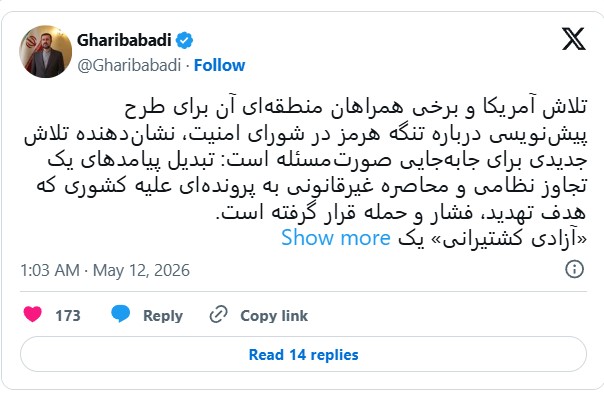
Gharibabadi’s rebuttal is not purely rhetorical. He advances a substantive legal position that international law scholars have debated for years. His central argument is that freedom of navigation — a genuine and well-established principle of international maritime law — cannot be applied selectively while ignoring the broader context of military aggression, sanctions, and naval blockades that Iran characterises as the root cause of the current crisis.
The UN Charter itself, which the US resolution purportedly upholds, contains explicit prohibitions on threats or use of force against the territorial integrity of sovereign states. Iran’s position is that Washington’s sanctions regime, military presence in the Gulf, and support for Israeli military operations constitute precisely those prohibited threats — and that any resolution which ignores those facts while penalising Iran’s defensive responses is structurally dishonest.
Whether one accepts Tehran’s framing entirely or not, the legal argument creates enough ambiguity to complicate Western consensus-building at the Security Council and in broader international opinion.
The Closed-Door Gulf Consultations: What Washington Was Building
The detail that Washington held private consultations with Persian Gulf states before circulating the draft resolution is diplomatically significant and underreported. It suggests the US was attempting to assemble regional legitimacy for the text before bringing it to the full Security Council — a standard pre-resolution strategy designed to demonstrate that the initiative reflects regional consensus rather than unilateral American pressure.
Which Gulf states participated has not been publicly confirmed. But the framing matters enormously. Several Gulf Cooperation Council members maintain complex dual relationships — security partnerships with Washington alongside economic interdependence with Iran that makes open confrontation costly. Any Gulf state co-sponsoring or publicly endorsing a resolution that threatens Iran with force would be making a significant and potentially irreversible diplomatic commitment.
Why the Strait of Hormuz Is the Ultimate Pressure Point
The Strait of Hormuz is approximately 33 kilometres wide at its narrowest navigable point. It connects the Persian Gulf to the Gulf of Oman and the broader Arabian Sea. Every day, tankers carrying oil from Saudi Arabia, the UAE, Kuwait, Iraq, and Iran transit this corridor — representing energy supplies that flow to Europe, Asia, and beyond.
Iran has previously threatened to close the strait during periods of maximum pressure with the United States — a threat taken seriously enough that the US Fifth Fleet maintains permanent presence in Bahrain specifically to deter and respond to such a scenario. Any escalation that genuinely disrupts Hormuz transit would trigger immediate energy price shocks globally, affecting economies from Germany to Japan to India with no direct stake in the US-Iran confrontation.
That is precisely why Gharibabadi’s warning that the resolution is “doomed to failure from the outset” carries weight beyond diplomatic posturing. A failed UN resolution does not neutralise the crisis — it removes multilateral cover for future de-escalation and pushes both sides further toward unilateral action.
FAQ: Key Questions Answered
What does the US resolution demand from Iran? It calls for an immediate halt to Iranian activity the US characterises as attacks in the Strait, threatens new sanctions, and raises the possibility of authorising force.
Can the US actually pass this resolution? Passage requires Security Council consensus. Russia and China are expected to oppose or veto any text threatening Iran with force.
What is Iran’s legal basis for rejecting the resolution? Tehran argues freedom of navigation cannot be applied while ignoring US sanctions, military presence, and Israeli operations that Iran considers illegal provocations under the UN Charter.
Catch all the World News, Breaking News Event and Trending News Updates on GTV News
Join Our Whatsapp Channel GTV Whatsapp Official Channel to get the Daily News Update & Follow us on Google News.
Must Read

Entertainment
Pakistani AI Filmmaker Zahid Iqbal’s ‘The Mother’s Monster’ Surpasses 50 Million Views
1-October،2026