Punjab Motorcycle Relief Package 2026 — Petrol Subsidy, Fee Waiver and How to Apply Explained

Punjab Motorcycle Relief Package 2026 — Petrol Subsidy, Fee Waiver and How to Apply Explained
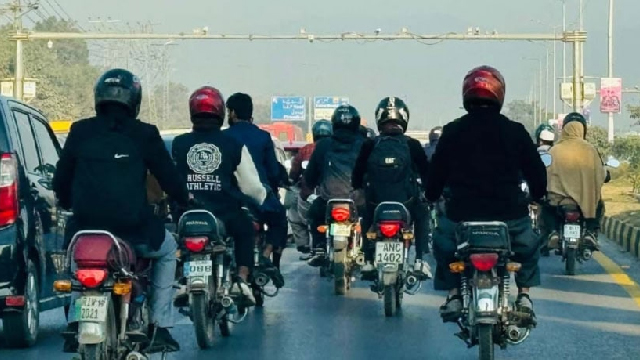
For millions of Punjabis who depend on motorcycles as their primary mode of transport, the provincial government has delivered a relief package that directly addresses two of the most persistent financial pressures on low and middle-income riders — fuel costs and registration bureaucracy.
Chief Minister Maryam Nawaz announced the measures through social media, framing them as targeted economic relief for the common man. The details, however, reveal a policy intervention with implications that extend well beyond routine subsidy announcements.
The Petrol Subsidy: What It Means in Real Numbers
The headline measure is a Rs100 per litre subsidy on petrol for registered motorcycle owners — applicable on up to 20 litres per month. At current petrol prices in Pakistan, that translates to a monthly saving of Rs2,000 for a rider who consumes the full subsidised allocation.
For a daily wage earner, a small business delivery rider, or a factory worker commuting across Lahore or Faisalabad, Rs2,000 monthly is not a marginal saving. It represents a meaningful reduction in the proportion of income consumed by basic transport costs — which for many working-class Punjab households has been rising steadily alongside fuel price increases over the past two years.
The subsidy applies specifically to registered owners, which creates an important incentive dynamic. Unregistered motorcycle owners — a significant segment of Punjab’s two-wheeler population — must formalise their vehicles to access the benefit. That requirement simultaneously delivers financial relief and advances the government’s broader traffic regulation and documentation objectives.
Registration and Transfer Fees: The Waiver Window Explained
Alongside the petrol subsidy, the Punjab government announced a time-bound fee waiver covering three specific charges that have historically deterred motorcycle formalisation among lower-income owners.
The motorcycle transfer fee of Rs605, the additional registration mark fee of Rs1,000, and the smart card fee of Rs1,300 were all waived for a period running from April 6 to May 5, 2026. Combined, these three charges total Rs2,905 — a figure that, while modest in absolute terms, represents a genuine barrier for daily wage earners making decisions about whether to formally register a secondhand motorcycle purchase.
The waiver window has now closed based on the announced dates, but its policy logic remains relevant. Transfer fee waivers typically produce measurable spikes in registration activity — bringing previously undocumented vehicles into the formal system, improving traffic safety data, and expanding the registered owner base that becomes eligible for ongoing subsidy programmes like the petrol relief.
How to Apply for the Petrol Subsidy
The Punjab government has established three access channels for subsidy applications, reflecting an awareness that digital literacy and smartphone access vary significantly across the province’s urban and rural populations.
The primary digital channel is the Maryam Ko Bataye app — a provincial government application that serves as a multi-purpose citizen services and feedback platform. Motorcycle owners can submit subsidy applications directly through the app after completing registration verification.
For citizens without reliable smartphone access, the helpline 1000 provides a voice-based application route — important for older riders, rural residents, and those in areas with limited data connectivity. The official web portal serves as the third channel for desktop and browser-based applicants.
The three-channel approach is administratively sound. Pakistan’s subsidy programme history includes multiple examples of single-channel delivery systems creating access bottlenecks that disproportionately exclude the most economically vulnerable intended beneficiaries. Distributing access across app, phone, and web reduces that risk materially.
Why This Policy Matters Beyond the Numbers
Pakistan has approximately 28 million registered motorcycles nationally, with Punjab accounting for the largest share of that fleet. The motorcycle is not a recreational vehicle in this context — it is infrastructure. It carries workers to factories, students to schools, and goods to markets across a province where public transport networks remain chronically underdeveloped outside major urban centres.
Policies that reduce the cost of motorcycle ownership and operation therefore function as de facto public transport subsidies — reaching populations that formal bus or rail subsidies never touch. CM Maryam Nawaz’s framing of this package as economic convenience for the common man reflects that political reality accurately, even if the policy documentation does not always make the connection explicit.
Comparable motorcycle relief measures in other Pakistani provinces — including Sindh’s Rs2,000 motorcyclist relief and free bike registration announcements — suggest a national-level political convergence around two-wheeler transport as a priority relief category in 2026, driven by sustained fuel price pressure and pre-election welfare positioning across multiple provincial administrations.
Catch all the Pakistan News, Breaking News Event and Trending News Updates on GTV News
Join Our Whatsapp Channel GTV Whatsapp Official Channel to get the Daily News Update & Follow us on Google News.
Must Read
Pakistan
Bilawal Bhutto Pays Tribute to Karsaz Martyrs, Calls for Unity Against Terrorism
18-October،2026