
Pakistan’s Water Rights Must Be Protected Under International Agreements: Bilawal Bhutto

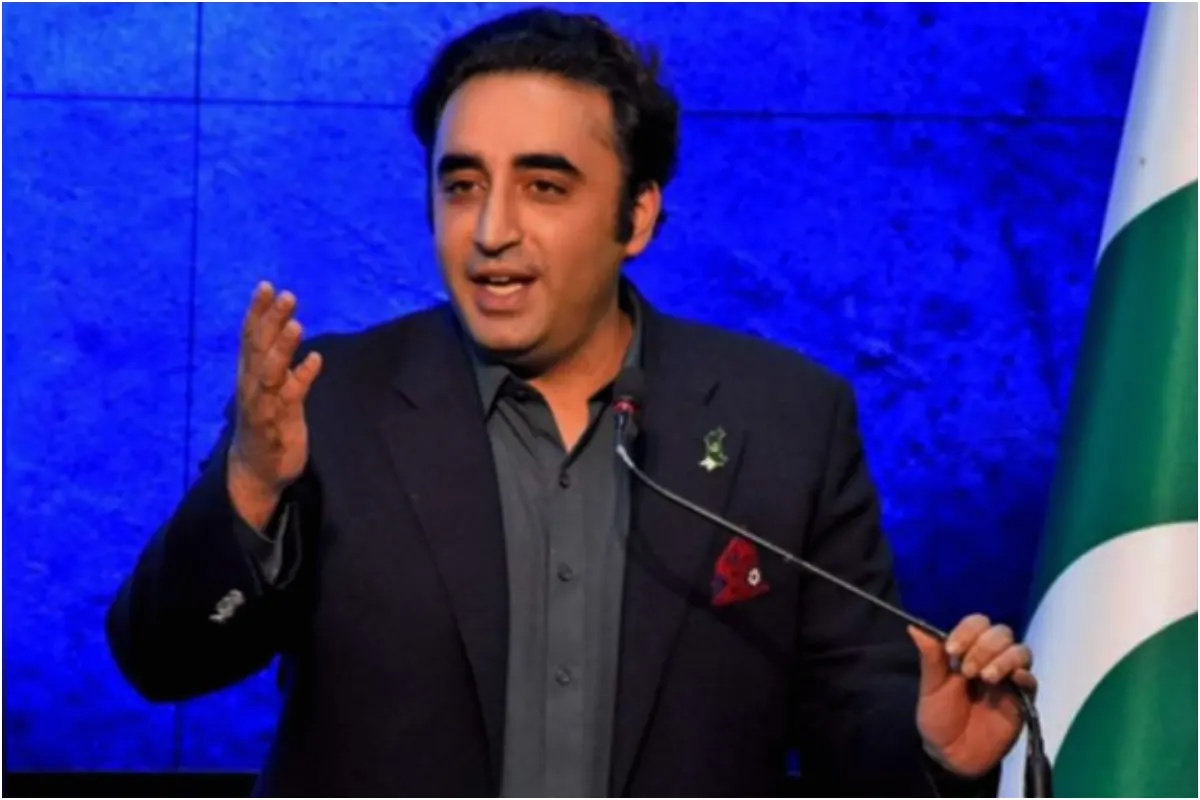
Bilawal condemns 'illegal war' on Iran, Middle East tensions could turn into world conflict
Bilawal Bhutto Zardari, Chairman of Pakistan Peoples Party, delivered a forceful statement at an international seminar on the Indus Waters Treaty, reframing water rights from technical resource management into existential national security concerns. His remarks emphasize Pakistan’s position that the 1960 treaty requires restoration and enforcement against what he characterized as systematic Indian non-compliance.
Bhutto elevated water beyond conventional diplomatic language, asserting that the Indus River represents not infrastructure but survival itself—”food, future, and life” for millions of Pakistanis. This framing transforms disputes over water allocation from technical disagreement into civilizational stakes, language designed to mobilize domestic political support around water security as uncompromising national interest.
Central to his argument is the assertion that Pakistan has upheld ceasefire terms while India has failed to fulfill contractual obligations. This claim positions Pakistan as the aggrieved party upholding international law while India allegedly violates established frameworks. The distinction matters diplomatically: portraying oneself as treaty-defender rather than treaty-challenger strengthens legal standing in international forums and resonates with constituencies valuing institutional stability.
Bhutto’s comparison between the Strait of Hormuz closure—which destabilized global energy markets—and the Indus system’s strategic importance signals his assessment that water security rivals traditional geopolitical flashpoints. This analogy attempts to convince international audiences that water weaponization poses comparable risks to maritime chokepoint closure, elevating the issue beyond South Asian bilateral dispute into global concern requiring international intervention.
His specific statement that water allocation cannot become “a political pressure or weapon” contradicts his earlier characterization of water as “national security” matter. This tension reveals the fundamental challenge: Pakistan simultaneously argues water is too important for compromise while claiming it should remain protected from political leverage. Resolving this contradiction requires acknowledging that water becomes security matter precisely when nations assert non-negotiable claims.
The seminar context matters significantly. International proceedings on treaty implementation provide platforms where political leadership frames issues for both domestic and international audiences. Bhutto’s emphasis on national unity—”millions of people united on water rights”—serves domestic cohesion while signaling to India that water disputes cannot be managed through bilateral pressure.
His invocation of the Sindh, Jhelum, and Chenab rivers’ water allocation under the treaty reflects Pakistan’s legal foundation. The 1960 agreement explicitly allocated specific rivers to each signatory: India controls eastern rivers (Sutlej, Beas, Ravi) while Pakistan receives western rivers (Indus, Jhelum, Chenab). This division theoretically provides objective, quantifiable allocations resistant to political disputes. Yet implementing this division requires verifiable upstream measurement and good-faith compliance—precisely where conflicts emerge.
The statement that peaceful resolution requires “restoration” of the treaty signals Pakistani assessment that the current framework has operationally collapsed. This language prepares domestic constituencies for potential formal treaty abandonment while maintaining legal high ground—Pakistan can claim it sought restoration before considering alternatives.
Bhutto’s framing distinguishes between technical violations and systemic weaponization. Even he acknowledges that water disputes exist; his argument is that India has crossed into deliberate leveraging for political advantage rather than incidental implementation challenges. If accurate, this distinction justifies escalation beyond routine dispute resolution mechanisms into higher-level diplomatic and potentially international legal forums.
The international seminar format allows Pakistan to internationalize what might otherwise remain bilateral. By hosting international discussion of treaty implementation, Pakistan invites global scrutiny of Indian compliance—shifting dynamics from bilateral negotiation (where India maintains leverage advantage) toward multilateral assessment (where third-party evaluation introduces accountability pressure).
Whether this diplomatic positioning produces substantive outcomes depends on enforcement mechanisms and international willingness to pressure India toward compliance. Pakistani rhetoric establishes clear negotiating position, but water disputes ultimately require either binding arbitration or mutual agreement—both increasingly unlikely given current trajectory.
Catch all the Pakistan News, Breaking News Event and Trending News Updates on GTV News
Join Our Whatsapp Channel GTV Whatsapp Official Channel to get the Daily News Update & Follow us on Google News.
Must Read
Pakistan
Pakistan Highlights Creative-Economy Cooperation Potential With Russia’s Far East at EEF 2026
4-September،2026