
The Generation of the Eighties: A Living Bridge Between Time, Tradition, and Consciousness


“We didn’t just watch the world change, we reinvented ourselves with each changing world.”
In history, there are some generations that live in the same era, and others that have to live between the psychology of two different centuries, the values of two different societies, and two different worlds. The generation born in the eighties is one of them.
We are the generation that has traveled from the comfort of cassette tapes to artificial intelligence. Tape recorders, VCRs, black and white TVs, public schools, postal letters, landline phones, bicycles, typewriters, newspapers, then computers, the Internet, mobile phones, social media, cloud computing, and now artificial intelligence. Perhaps no other generation in history has seen the world change so rapidly with its own eyes.
But this was not just a journey of technology.
It was a journey of survival.
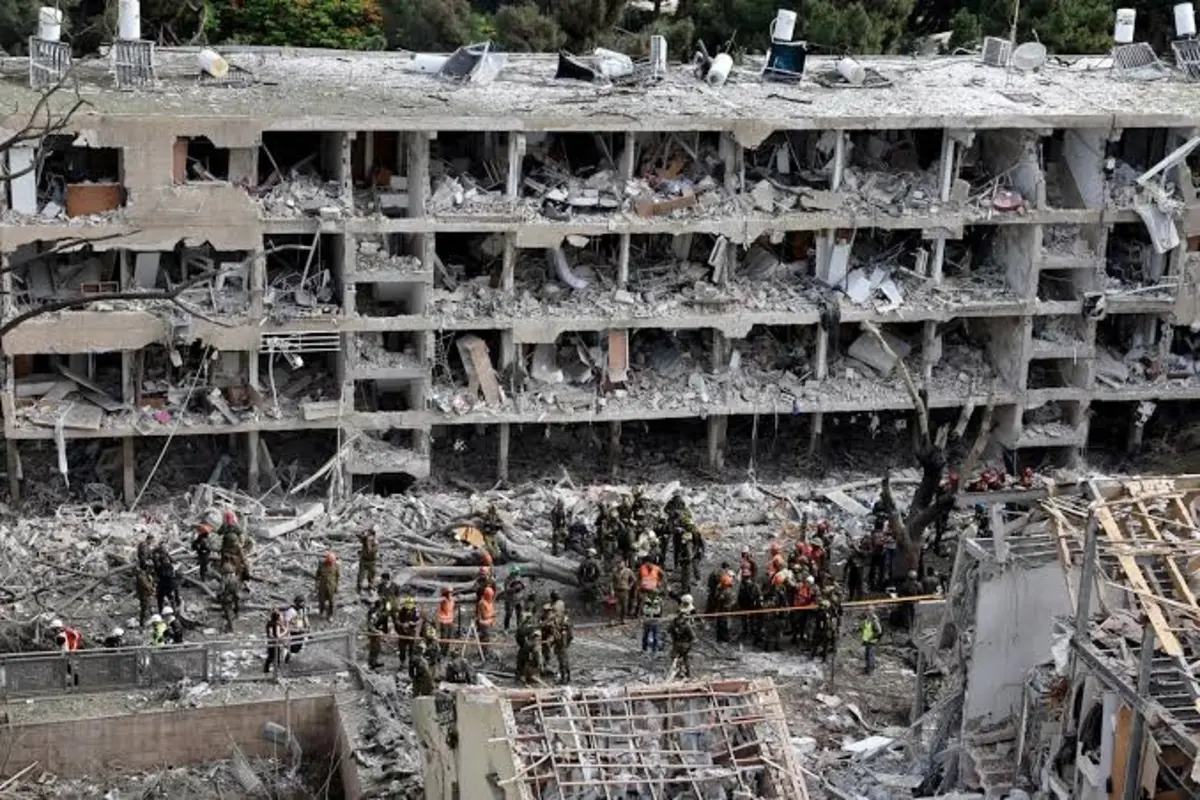
We have seen floods, earthquakes, terrorism, economic crises, global financial fluctuations, and then a pandemic like Corona, which has taught the whole world one lesson: no matter how much man boasts of his power, nature can change all calculations in an instant.
We were the children who sat on the wooden benches of government schools, where one teacher sometimes taught five classes. Today our children are learning international curricula, digital classrooms, artificial intelligence and robotics.
The world has changed.
Education has changed.
Professions have changed.
Communications have changed.
But the mentality of most homes has remained where it was perhaps half a century ago.
This was both the greatest tragedy and the greatest strength of this generation.
We were taught from childhood that the words of adults should not be ignored.
Then we were told not to ask questions.
Then we were told that you have little experience.
When we got an education, we were told that “books do not teach life.”
When practical experience came, we were told that “we have seen more of the world than you.”
It seems that the standards kept changing, but the youth was never allowed to enter the realm of decision-making.
Here a fundamental question arises.
Does experience come only with age?
If this were the case, every old person in the world would be wise and every young person would be ignorant.
The reality is the opposite.
Experience is not the same.
The ability to learn is also not the same.
Some people change the era with their thinking, knowledge and character at the age of twenty-five, and some people still live in the same prejudices in which they spent their childhood at the age of seventy.
Age only testifies to time.
Wisdom is born from continuous learning, questioning, admitting one’s mistakes, and accepting new knowledge.
But in our society, age has often been mistaken for reason, tradition for truth, and authority for wisdom.
This same thinking has created an environment in families, institutions, and social structures where young people’s opinions are seen as immaturity, disagreement as disrespect, and questioning as rebellion.
This attitude is not limited to homes.
It has also reinforced a social structure in which power is concentrated at the top and questions are suppressed at the bottom. The survival of feudal and family thinking is not only through land; it also lives in minds, when authority is linked to age, family, or status, and ability, argument, and character are given secondary status.
The generation of the eighties challenged this tradition for the first time.
He said that respect and blind obedience are not the same thing.
He said that reason is not related to age but to reason.
He said that not every tradition is sacred, and not every new thought is blasphemous.
But perhaps the deepest wound was not inflicted by technology.
That wound was found inside the home.
We were told to be strong, but no one told us how to put ourselves together after a breakup.
We were told to think positively, but no one taught us how to create positive thinking.
We were taught to work hard, but we were silenced about the injustices of the system.
We were told to be successful, but we were not told how to face constant failure, unemployment, economic pressure, loneliness, anxiety, and depression.
At home, emotions were often considered weakness.
Boys were told that men don’t cry.
Girls were told that patience was their strength.
Sadness was considered ingratitude, anxiety was considered weak faith, and mental illness was considered stubbornness or laziness.
Thus, an entire generation learned to bury its pain not in words but in silence.
Then we saw another contradiction.
We were preached against addiction.
The evils of alcohol were explained.
These teachings are important in their essence and the moral foundation of society.
But the question is, why was the conversation always limited to the weak individual?
The young man was told to stay away from drugs, but the powerful networks that run the drug trade, their patronage, the failure of law enforcement agencies, and the weak system of accountability were rarely discussed with the same intensity.
The drinker was criticized, but there was more silence on the facilitators and profiteers of this illegal trade.
The lesson of not taking bribes was taught, but silence was maintained against influential people who took bribes.
The lesson of speaking the truth was taught, but when justice seemed different for the powerful and the weak, a natural question arose in the young man’s mind:
Is morality only for the weak?
This question was not against religion.
It was against those attitudes that apply religious or moral language only to the weak, while remaining silent for the powerful.
This selective morality became the greatest mental conflict of the young generation.
There was also a strange contradiction at home.
Parents and guardians saw themselves as the protectors, providers, and saviors of the family, and of course, many made countless sacrifices for their children. But in many homes, emotional nurturing, dialogue, trust, and mental security were not given the importance they needed.
Expectations were placed on the shoulders of children.
Take care of the house.
Study.
Get a job.
Be a support for parents.
Take responsibility for the little ones.
Be positive.
Be successful.
Don’t complain.
And if you asked how all this would be done?
The answer was often:
“Nobody taught us either, you learn yourself.”
This was perhaps the greatest tragedy of the entire generation.
The responsibility was given in full, but the guidance was incomplete.
The burden was given in full, but the tools were not.
Then when these same young people expressed their mental exhaustion, anxiety or failure, they were called weak.
Despite this, this same generation did not give up.
It made its wounds a philosophy.
It turned its silence into dialogue.
It tried to turn its deprivation into freedom for the new generation.
This same generation asked its children for the first time:
“How are you feeling?”
This same generation started talking about mental health.
This same generation said that if parents can make mistakes, children can also disagree, and disagreement does not end love.
This very generation is present in every sector of society.
They are teachers, scientists, doctors, engineers, business leaders, and parents; they are the ones teaching the new generation not merely information, but a way of thinking.
This generation has learned that artificial intelligence cannot replace humans, provided humans fulfill their moral and intellectual responsibilities.
They have also realized that societies do not become modern merely through roads, bridges, and buildings.
Societies become modern when a young person who asks questions is not viewed as an adversary; when justice applies equally to the powerful and the weak; when ethical standards are not imposed solely upon the vulnerable; when parents act as guides rather than mere providers; and when traditions are evaluated against the touchstones of reason, justice, and humanity.
Perhaps that is why I believe that the generation of the eighties was not the luckiest generation in the world, but it was probably the most surviving generation.
Because it did not just face time.
It understood time, conversed with tradition, transformed fear into awareness, and left the message for future generations that inheritance is not just land, house, or wealth; the greatest inheritance is a free, questioning, just, and humane mind.
Catch all the Blogs News, Breaking News Event and Trending News Updates on GTV News
Join Our Whatsapp Channel GTV Whatsapp Official Channel to get the Daily News Update & Follow us on Google News.
Must Read