The Idea Called G. M. Syed

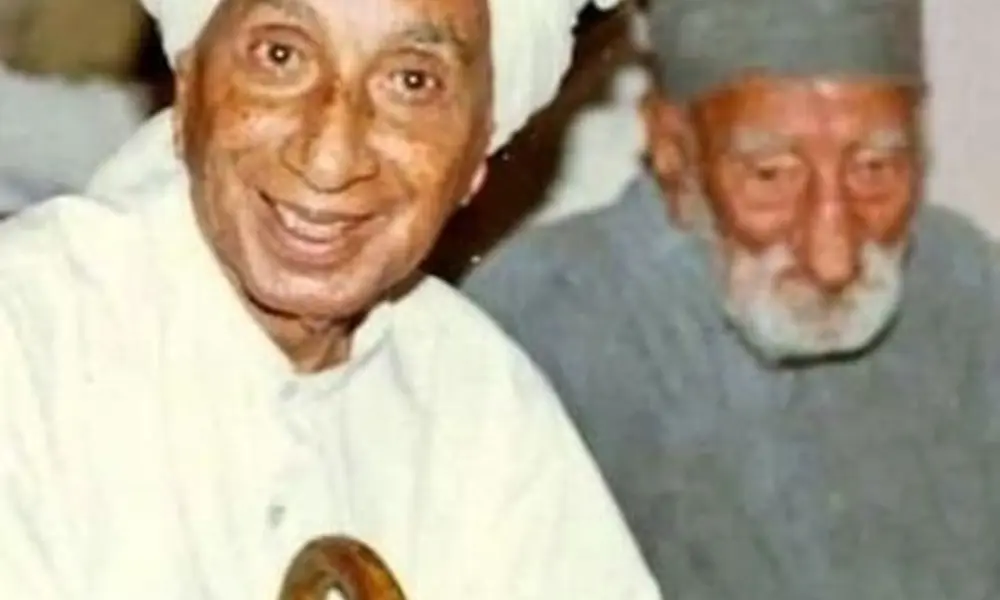
Imagine growing up in a world where your language is spoken every day, your poetry is sung at every gathering, your shrines attract millions of visitors, and your history stretches back more than five thousand years and still your school textbooks tell you very little about any of it. Imagine being told that your identity begins only with the creation of a modern state, while centuries of your civilization are reduced to a few pages. That was the question Ghulam Murtaza Syed better known as Sain G. M. Syed spent his life asking: Can a people truly move forward if they forget where they came from?
Born in Sann in 1904, G. M. Syed witnessed the collapse of empires, the struggle for independence, the birth of Pakistan and the political transformations that followed. He was not simply a participant in history; he helped shape it. As a leader of the All-India Muslim League in Sindh, he supported the demand for Pakistan and played a major role in securing the Sindh Assembly’s historic resolution in favor of the creation of the new state. At that time, he believed Pakistan would become a federation where each historic nation and province would preserve its own language, culture and identity while sharing a common future.
History, however, rarely follows the plans of those who make it. As Pakistan evolved, Syed increasingly believed that Sindh’s history and identity were being overshadowed by a centralized national narrative. Rather than accepting this change quietly, he began asking questions that were unusual for his time: What makes a nation? Is it religion alone, or is it also language, memory, geography, literature and shared experiences? Can centuries of civilization be replaced by a single political identity? These questions would define the rest of his life and transform him from a leader of the Pakistan Movement into one of the most influential thinkers on Sindh’s identity.
For today’s generation, accustomed to debates about identity on social media, Syed’s ideas may seem surprisingly contemporary. Long before hashtags and digital activism, he argued that identity is something deeper than political slogans. To him, Sindh was not merely a province on a map. It was a civilization shaped over thousands of years by the Indus Valley Civilization, Buddhism, Hinduism, Islam and, above all, the teachings of Sufi saints who emphasized compassion, coexistence and humanity. He believed that these diverse influences had blended into a unique Sindhi worldview one that valued tolerance over intolerance and dialogue over division.
What made G. M. Syed different from many leaders of his era was that he did not rely only on speeches or political campaigns. He turned to books. More than sixty of them. He wrote about history, religion, literature, civilization and the future of Sindh. His library became his battlefield, and his pen became his most enduring instrument. In works such as Religion and Reality, he explored how civilizations and religious traditions evolved over time and argued that spirituality should encourage understanding rather than dogmatism. Whether readers agreed with his conclusions or not, his willingness to question accepted ideas made him one of the boldest intellectual voices of modern Sindh.
Syed also believed that poetry could preserve a nation more effectively than power. That is why he devoted considerable attention to Shah Abdul Latif Bhittai, Sachal Sarmast, Lal Shahbaz Qalandar and Shah Inayat. While many viewed these figures solely as saints or poets, Syed saw them as custodians of Sindh’s collective memory. In his interpretation, Shah Abdul Latif was not only composing verses of love and longing; he was expressing the hopes, struggles and moral imagination of an entire people. By reintroducing these literary giants to modern readers, Syed encouraged Sindhis to see their own cultural heritage as a living source of identity rather than a collection of old stories.
History itself became another subject he revisited. Instead of accepting official historical narratives without question, Syed returned to figures such as Raja Dahir, Dodo Soomro, Darya Khan, Makhdoom Bilawal and Shah Inayat Shaheed. He argued that understanding these personalities helped explain how Sindh developed its own historical experience and cultural continuity. His reinterpretation encouraged readers to revisit familiar stories from new perspectives and sparked discussions that continue among historians and scholars today.
As his thinking evolved, Syed eventually proposed the concept of Sindhudesh, envisioning Sindh as a distinct national homeland, and established the “Jeay Sindh Movement” to promote that idea. This marked the most controversial phase of his life. His advocacy was rejected by successive Pakistani governments, and he spent approximately three decades under imprisonment, detention and house arrest. His political position remains disputed and continues to generate strong debate. Yet even those who disagree with his conclusions generally acknowledge the scale of his influence on discussions about Sindh’s history, identity and culture.
Why does G. M. Syed still matter in the twenty-first century? Not because every generation must agree with him, but because every generation benefits from asking the kinds of questions he asked. Who writes history? What keeps a culture alive? Can literature shape politics? How do language, memory and heritage influence the future of a society? These questions remain as relevant in the age of artificial intelligence and social media as they were in Syed’s lifetime.
For Generation Z, G. M. Syed is more than a historical figure associated with political controversy. He represents the power of ideas, the importance of preserving cultural memory and the belief that books, poetry and history can shape how a society understands itself. Whether one embraces or challenges his conclusions, his work continues to invite readers to think critically about identity, heritage and the relationship between the past and the future. That enduring conversation is perhaps his greatest legacy.
Catch all the Blogs News, Breaking News Event and Trending News Updates on GTV News
Join Our Whatsapp Channel GTV Whatsapp Official Channel to get the Daily News Update & Follow us on Google News.
Must Read
Pakistan
Sindh Government Spokesperson Challenges MQM-P’s Administrative Units Demand
19-September،2026
Pakistan
Farooq Sattar Calls for New Administrative Units, Criticizes Treatment of Muhajirs
19-September،2026