
Military Says Pakistan Prepared for Future Challenges

Military Says Pakistan Prepared for Future Challenges
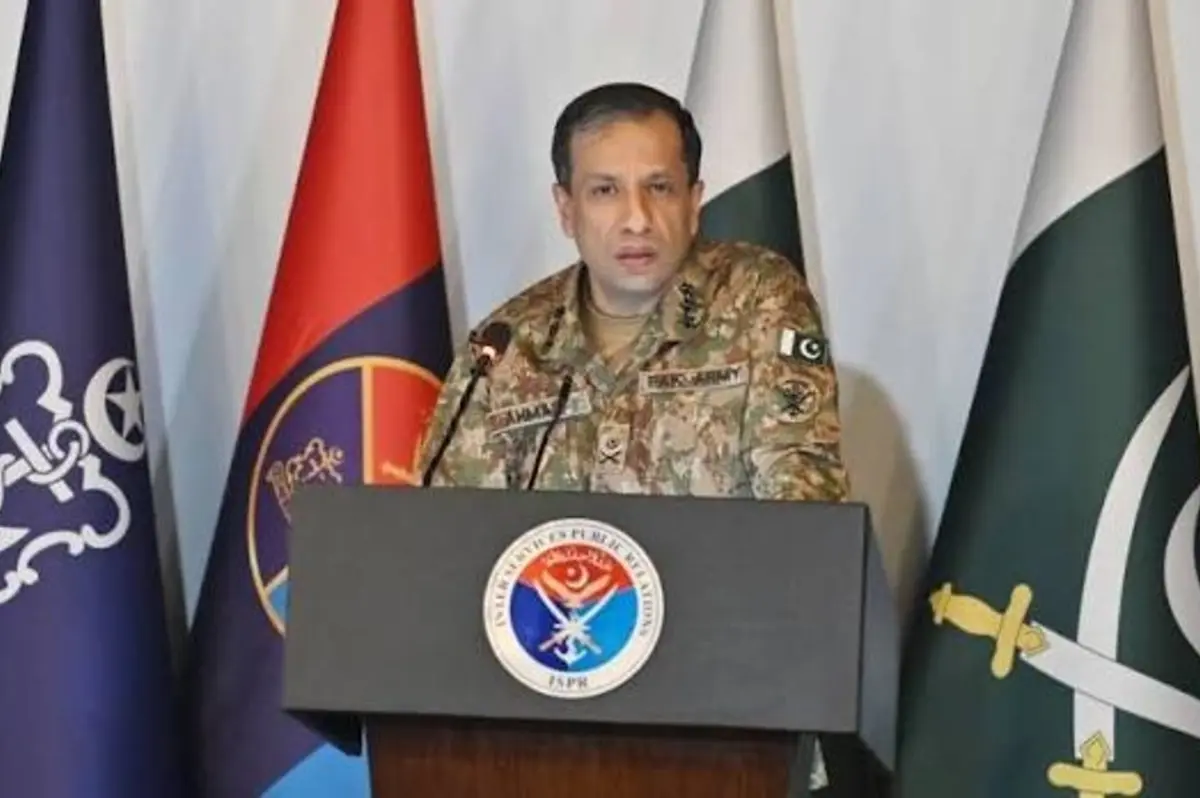
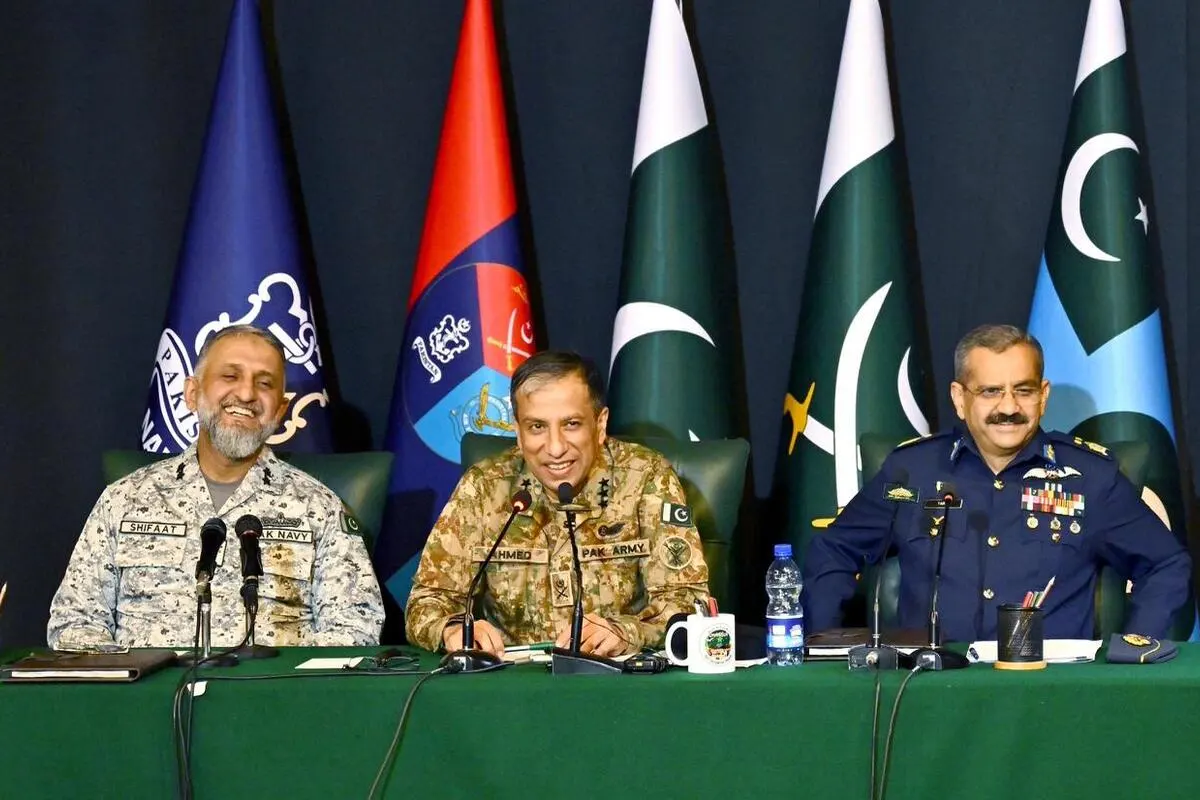
Inter-Services Public Relations (ISPR) Director General Lieutenant General Ahmed Sharif Chaudhry addressed a press conference on the first anniversary of Marka-e-Haq, highlighting Pakistan’s military response and strategic developments. According to ISPR, tensions escalated on May 6–7 last year after India made what Pakistan described as baseless and unfounded allegations following an incident in Indian Illegally Occupied Jammu and Kashmir. The situation reportedly led to an attack on Pakistan, which was met with a strong and decisive response. The military spokesperson stated that Pakistan responded with full force, resulting in significant losses for the opposing side and demonstrating Pakistan’s defensive capabilities. ISPR said the conflict, which lasted more than 80 hours, came to an end on May 10 after diplomatic intervention by the United States. During the confrontation, multiple Indian aircraft and drones were reportedly downed. The statement further described the outcome as reinforcing Pakistan’s position as a “net security stabiliser” in the region. Officials noted that the events of Marka-e-Haq remain a significant milestone in Pakistan’s military history and continue to shape national defense preparedness and strategic outlook. The press conference is part of commemorations marking the first anniversary of the conflict, and further details are expected to be released as the briefing continues. Pakistan’s military has stated that there is “no space for war” between two nuclear-armed neighbours, while reaffirming its commitment to peace, regional stability, and national defence during the first anniversary of Marka-e-Haq. The remarks were delivered by Inter-Services Public Relations (ISPR) Director General Lieutenant General Ahmed Sharif Chaudhry, alongside Rear Admiral Shifaat Ali Khan and Air Vice Marshal Tariq Ghazi, during a press conference in Islamabad. Referring to last year’s events, ISPR stated that tensions escalated on May 6–7 after India made what Pakistan described as baseless allegations following an incident in Indian Illegally Occupied Jammu and Kashmir. Pakistan said it responded with full force, leading to a more than 80-hour conflict that ended on May 10 after international intervention. According to ISPR, the confrontation resulted in multiple Indian aircraft and drones being downed and reinforced Pakistan’s image as a “net security stabiliser” in the region. At the start of the briefing, Lt Gen Chaudhry said, “We welcome you to ISPR on this happy day,” adding that Pakistan’s military had faced an adversary “five times larger than itself” and referred to India as a “terrorist state”. He stated that the briefing would focus on “10 strategic consequences” of the conflict from May 2025 to May 2026. The ISPR DG said the first consequence was the collapse of India’s narrative portraying Pakistan as a source of terrorism. He said the international community now recognizes Pakistan as a victim of terrorism rather than a perpetrator. He questioned India’s claims regarding incidents such as Pahalgam, asking, “Where is the evidence?” and criticized what he called baseless accusations. The second consequence, he said, was Pakistan’s recognition as a regional “net security stabiliser,” emphasizing its restrained and responsible response during escalation. The third consequence referred to what ISPR called the “politicisation of Indian military leadership and militarisation of political leadership,” warning it was dangerous for regional stability. The fourth consequence, according to ISPR, was global awareness of India’s alleged attempts to externalize internal issues while using terrorism as a “state tool.” It also reiterated that Kashmir remains an internationally recognized dispute. The fifth consequence was the exposure of Indian media and information operations. ISPR criticized restrictions on Pakistani media coverage and said, “The only thing that can survive in today’s information domain is truth.” The sixth consequence highlighted the “transformed character of warfare,” including multi-domain operations, cyber warfare, and cognitive warfare. ISPR said Pakistan remains prepared across all domains. The seventh consequence was Pakistan’s resilience and national confidence, described as a strengthened belief in national capability. The eighth consequence emphasized deterrence, with ISPR stating: “there is no space for war between two geographically contiguous nuclear states.” The ninth consequence was Pakistan’s recognition as a responsible middle power with strategic global importance. The tenth and final consequence was described as the “Bunyan-um-Marsoos effect,” referring to unity between the people, government, and armed forces. Air Vice Marshal Tariq Ghazi also provided operational details, stating that the Pakistan Air Force (PAF), under Air Chief Marshal Zaheer Ahmed Baber Sidhu, maintained high alert, full surveillance, and strong air defence readiness during the conflict. He said, “We adopted a strong air defence posture to thwart any hostile adventure,” adding that multi-domain assets were integrated for the first time in operational history. He claimed the PAF achieved an “8–0 outcome” against the Indian Air Force, stating that multiple aircraft were downed, including Rafale, Su-30, MiG-29, Mirage 2000, and a multi-role unmanned aerial system, while others were severely damaged.Strategic Consequences Highlighted by ISPR
Air Force Operational Summary
Catch all the Pakistan News, Breaking News Event and Trending News Updates on GTV News
Join Our Whatsapp Channel GTV Whatsapp Official Channel to get the Daily News Update & Follow us on Google News.
Must Read


Pakistan
Bilawal Bhutto Holds Series of Meetings on Sindh’s Political and Administrative Affairs
1-October،2026