
What are Iran’s ballistic missile capabilities? Arsenal, Ranges, and Strategic Use

What are Iran's ballistic missile capabilities? Arsenal, Ranges, and Strategic Use
As Iran holds another round of nuclear talks with the United States in Geneva, its extensive ballistic missile arsenal remains a major point of contention. Western powers view Iran’s missiles as both a conventional military threat and a potential delivery system for nuclear weapons, although Tehran denies any intent to build atomic bombs.
What Are Ballistic Missiles?
A ballistic missile is a rocket-propelled weapon guided during its ascent but follows a free-fall trajectory for most of its flight. It can carry warheads containing conventional explosives or, potentially, biological, chemical, or nuclear munitions.
Iran’s Missile Types and Ranges
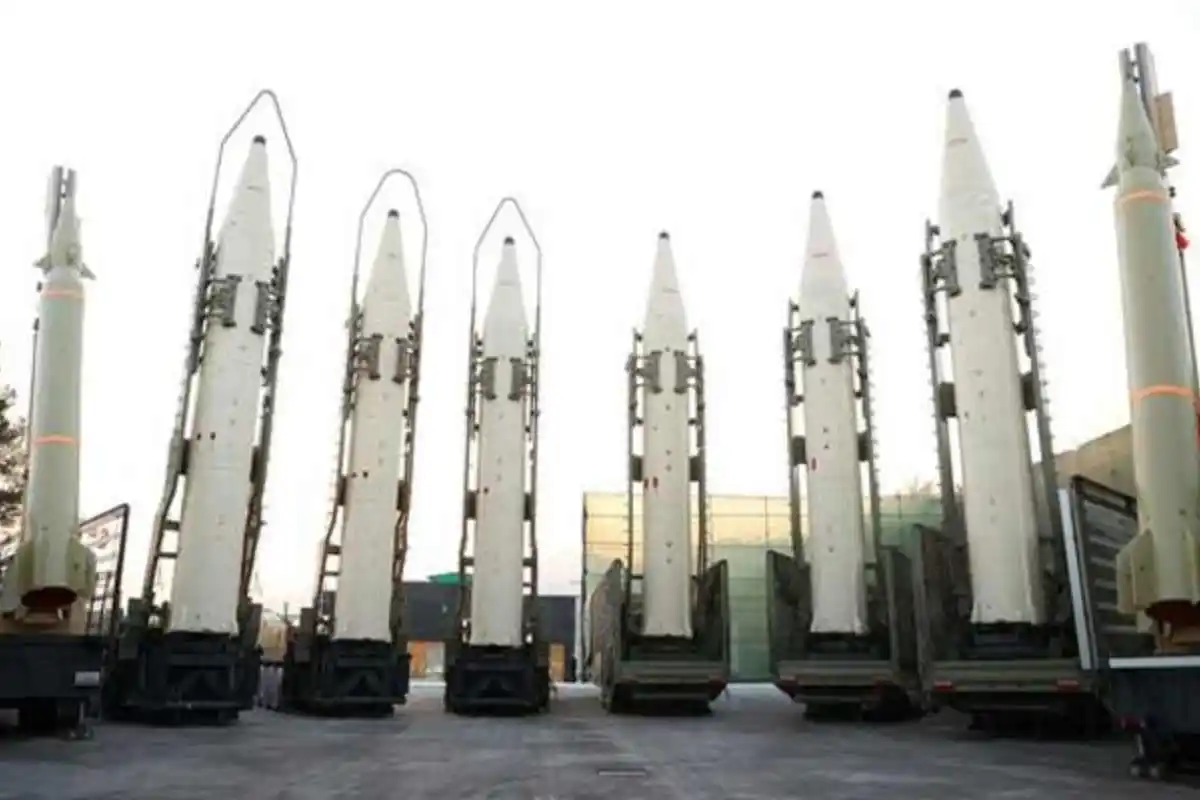
Iran reportedly holds the largest stockpile of ballistic missiles in the Middle East, with a self-imposed range limit of 2,000 km (1,240 miles), sufficient to reach Israel. The country has at least five known underground missile sites, often referred to as “missile cities,” located near Tehran, Kermanshah, Semnan, and along the Gulf region.
Key missiles in Iran’s arsenal include:
- Sejil: 2,000 km
- Emad: 1,700 km
- Ghadr: 2,000 km
- Shahab-3: 1,300 km
- Khorramshahr: 2,000 km
- Hoveyzeh: 1,350 km
A semi-official Iranian news outlet, ISNA, reported that the Sejil could fly at over 17,000 km/h with a 2,500 km range. Other missiles capable of reaching Israel include the Kheibar (2,000 km) and Haj Qasem (1,400 km). Additional missiles include Shahab-1 (300 km), Zolfaghar (700 km), and Emad-1 (under development, 2,000 km).
Recent Missile Usage
Iran has actively deployed missiles in recent years:
- June 2025: During a 12-day war with Israel, Iran fired missiles causing casualties and infrastructure damage.
- January 2024: The Revolutionary Guards targeted Israel’s spy headquarters in Iraq and Daesh positions in Syria.
- 2020: Iran launched missiles at US-led forces in Iraq in retaliation for the killing of Major General Qassem Soleimani.
Missile Strategy and Development
Iran maintains that its ballistic missiles serve as a deterrent and retaliatory force against the US, Israel, and regional threats. The country has invested in underground missile depots with transport and firing systems, along with production and storage facilities.
“Years of reverse-engineering missiles and producing various missile classes have also taught Iran about stretching airframes and building them with lighter composite materials to increase missile range,” according to a 2023 report by Behnam Ben Taleblu of the US-based Foundation for Defense of Democracies.
In 2023, Iran unveiled its first domestically made hypersonic missile, capable of flying at least five times faster than the speed of sound along a complex trajectory. The missile program largely draws on North Korean and Russian designs, with assistance from China. Iran also possesses cruise missiles, including the Kh-55, an air-launched nuclear-capable weapon with a 3,000 km range.
With these capabilities, Iran’s missile program remains a central concern for global security, shaping both diplomatic negotiations and military strategies in the Middle East.
Catch all the World News, Breaking News Event and Trending News Updates on GTV News
Join Our Whatsapp Channel GTV Whatsapp Official Channel to get the Daily News Update & Follow us on Google News.
Must Read



World
Iran Warns Sanctions and Blockade Are Disrupting Access to Life-Saving Medicines
19-October،2026